How to Verify AI Legal Research in the Philippines
Sophie Pasicolan

AI can give you a useful starting point for legal research, but how do you check that its answer is actually supported?
In this article, we’ll walk you through a practical process for verifying AI-assisted legal research in the Philippines. We’ll also show you how to do it in Anycase.
In practical terms, that means checking four things:
the cited authority actually exists;
the source says what the AI claims it says;
the AI hasn’t changed the meaning by leaving out a qualification or limiting language; and
the authority actually supports the conclusion being made.
What is the legal basis of an AI answer?
The legal basis is the legal authority that supports a conclusion.
If an AI says that a taxpayer has 30 days to challenge an assessment, the legal basis should identify the provision establishing that deadline.
A legal answer usually has three parts:
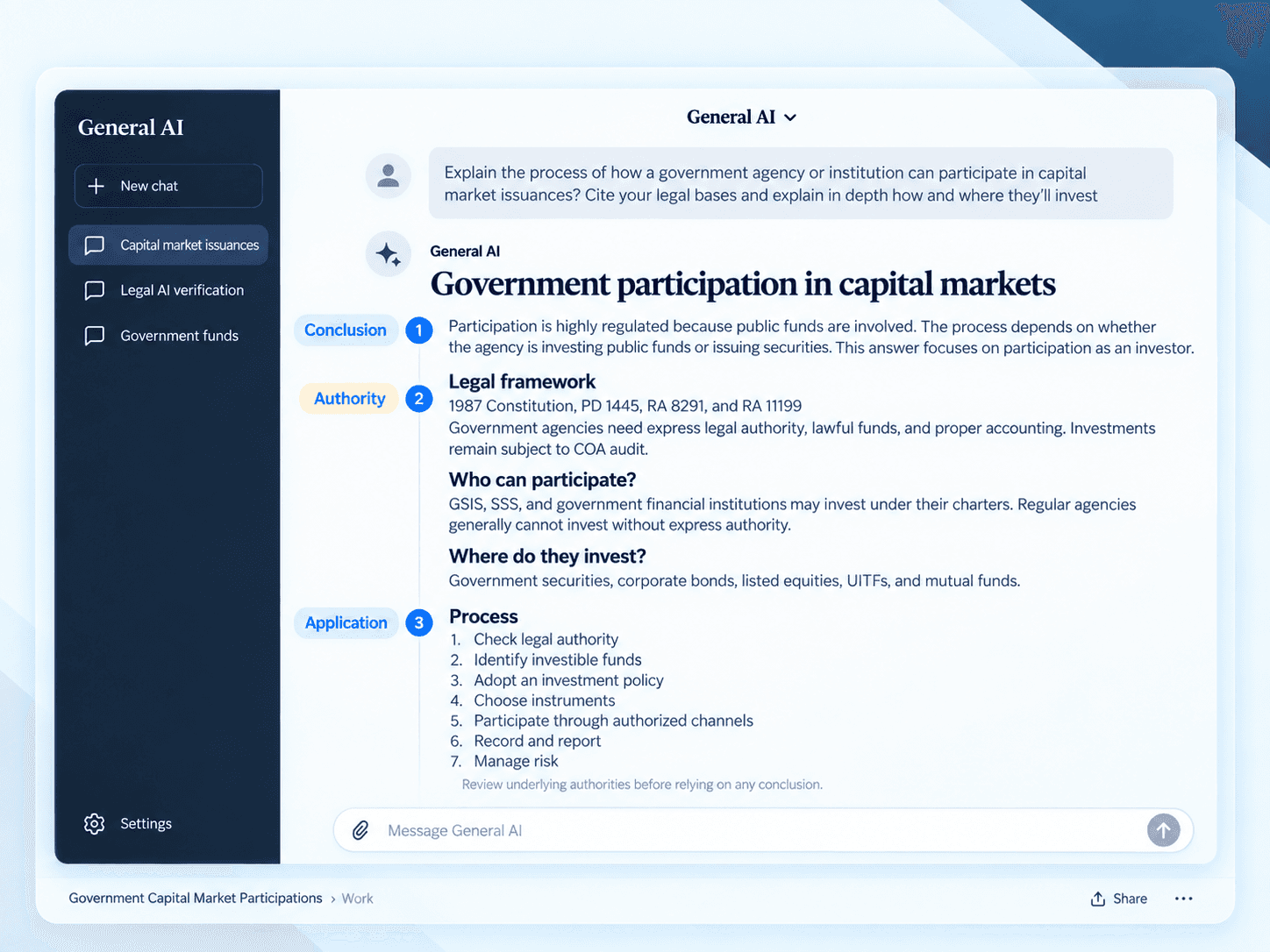
The conclusion: What does the law allow, require, or prohibit?
The authority: Which law, case, rule, or issuance establishes that rule?
The application: Why does that rule apply to the facts or issue being researched?
The legal basis is the connection between these parts - it’s what allows a lawyer to move from “the AI said this” to “this conclusion follows from a particular legal authority.”
Without that connection, the answer may be fluent and plausible, but it is difficult to examine or rely on.
Why checking the legal basis matters for AI-assisted legal research
Checking the legal basis is how you test whether an AI answer is actually connected to the law. You’re not just checking whether the answer contains a citation - you’re checking whether the AI identified the rule that governs the issue, understood its limits, and applied it correctly to the question in front of you.
A lawyer reviewing an AI-generated answer therefore needs to ask more than, “Is this citation real?”
The more useful questions are:
Is this the authority that governs the issue?
Does it actually support the proposition?
Is there a later rule or decision that changes the result?
Did the AI leave out an exception, qualification, or procedural requirement?
Is there another authority that should have been considered?
This approach is consistent with the Supreme Court’s proposed governance framework for the judiciary, which describes AI as human-centered augmented intelligence. AI is meant to assist human work, —not replace human judgment or decide legal matters in place of people. Read the Supreme Court’s AI framework.
According to the Supreme Court’s Responsible AI usage framework: Verification is therefore not a separate step that begins after the “real” research. It is part of using AI responsibly. A reliable legal AI system should reduce the mechanical work of searching and cross-checking, while still giving the lawyer enough visibility into the sources to exercise independent legal judgment.
The 3-step process for verifying AI legal research
Step 1: Identify the legal conclusion and its basis
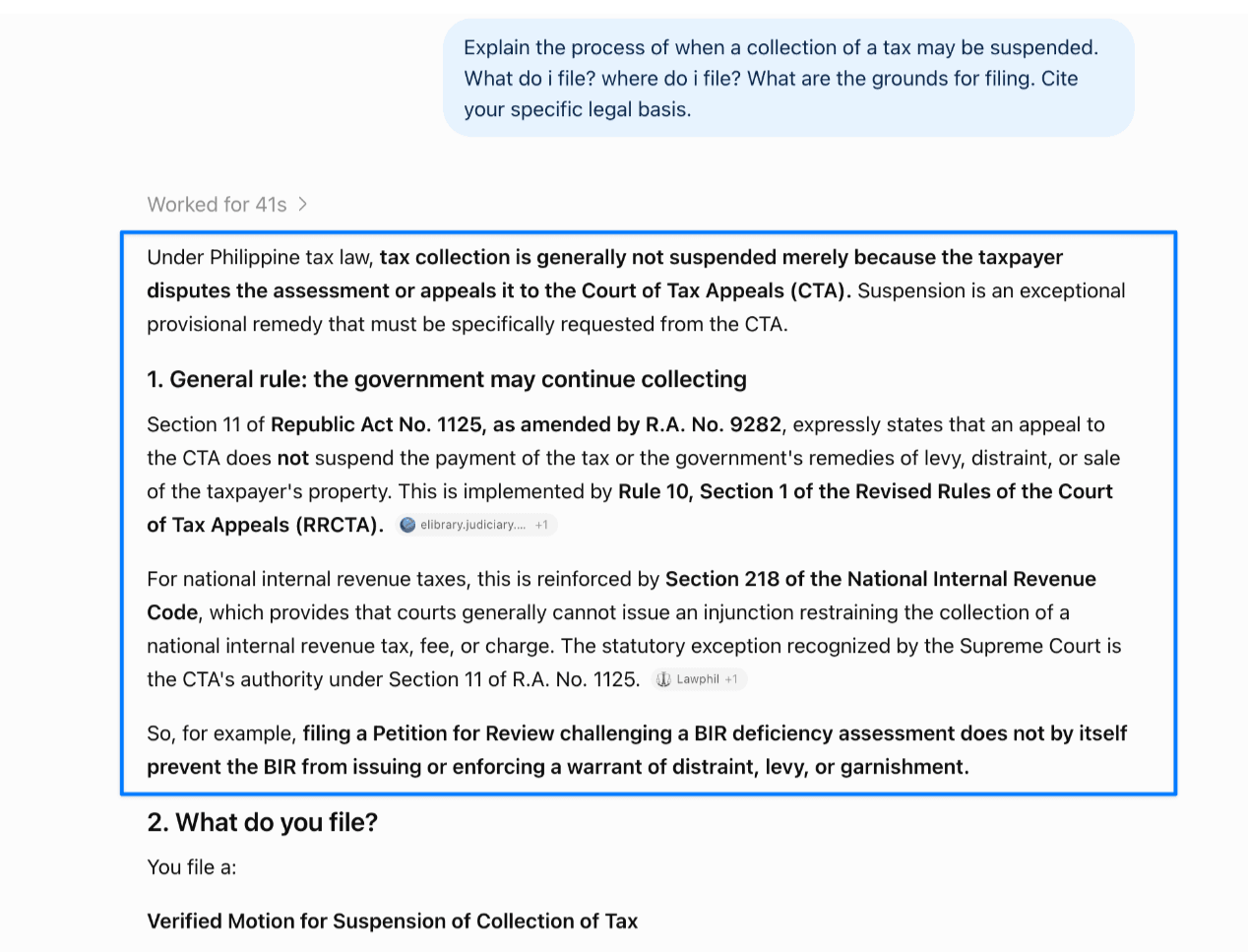
Begin by identifying exactly what the AI is saying.
Do not treat a long paragraph as one conclusion. Break it down into its individual propositions:
What rule is being stated?
What deadline or procedural requirement is being identified?
What remedy or defense is being recommended?
What facts are being treated as legally significant?
What exceptions are being mentioned or left unmentioned?
Then ask the AI to identify the legal basis for each material proposition. The answer should point you to a specific law, case, rule, regulation, circular, or issuance. A statement such as “this is allowed under Philippine law” is not enough. You should be able to trace the conclusion to a particular authority and, ideally, a particular provision or passage.
Asking the AI to show its sources can make your review faster, but it isn’t verification. The AI may repeat the same mistake or produce another citation that sounds convincing but doesn’t exist. Treat its response as a research starting point, then verify each claim against the underlying authority yourself.
Our advice: if you can’t draw a clear line from a specific sentence in the AI’s answer to a specific provision in a real legal source, don’t rely on that sentence yet.
Asking the AI to explain its source can make the review process faster. It is not, by itself, independent verification. The AI may repeat the same mistake or generate another unsupported citation.
Step 2: Confirm that the authority exists
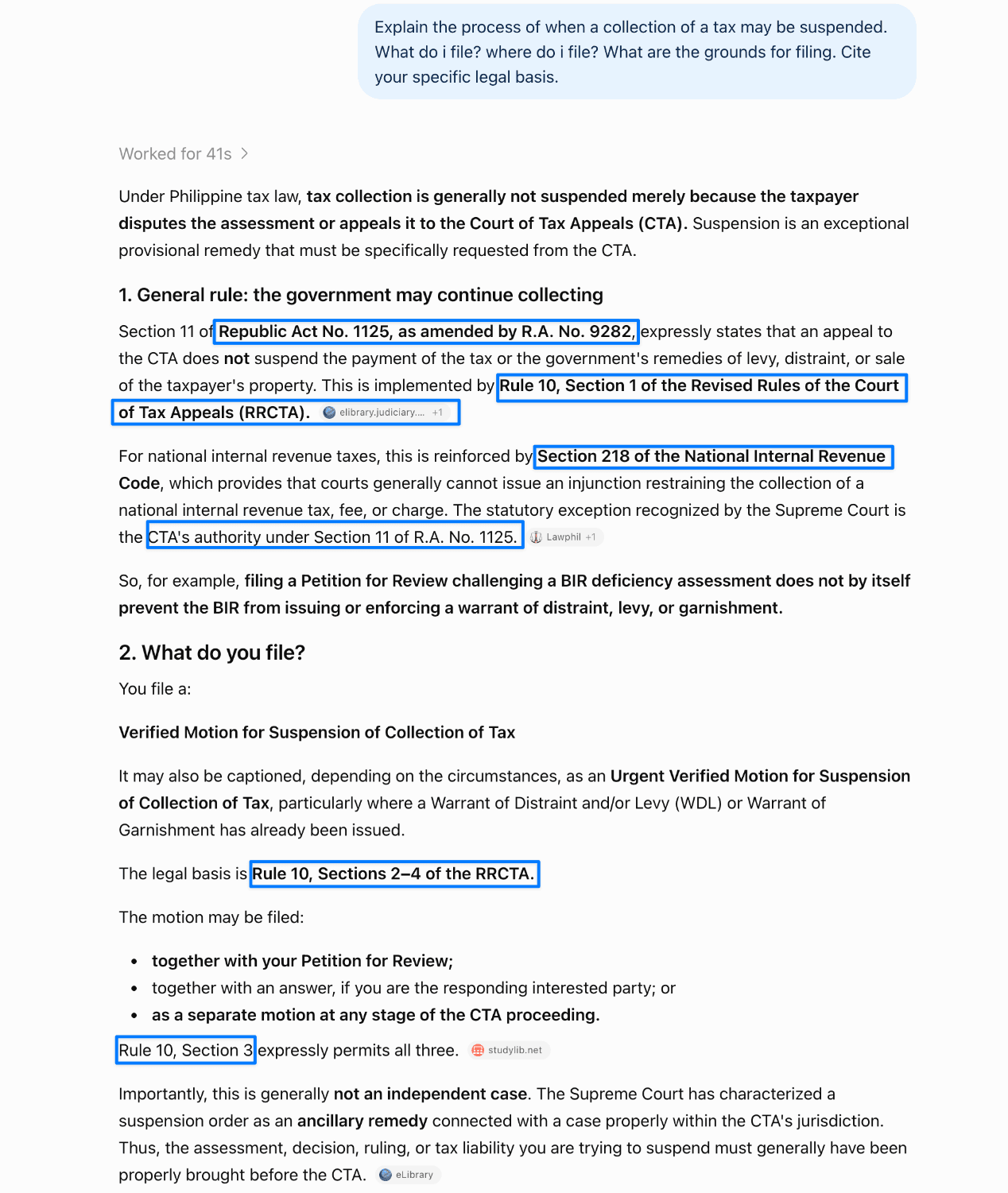
Once the AI identifies an authority, verify the citation independently.
For a case, check the:
case title;
G.R. number;
date of promulgation;
court or division, where relevant; and
full text of the decision.
For a law, rule, or issuance, check the:
title and number;
issuing body;
date or series;
specific section cited; and
official or canonical source.
For Philippine legal materials, check sources such as the Supreme Court E-Library, the Official Gazette, or the official website of the agency that issued the document.
Don’t rely on a citation just because the case title or G.R. number looks plausible. Open the source and make sure the document exists. If you can’t find it, treat the claim as unverified.
Step 3: Confirm what the authority says and whether it still applies
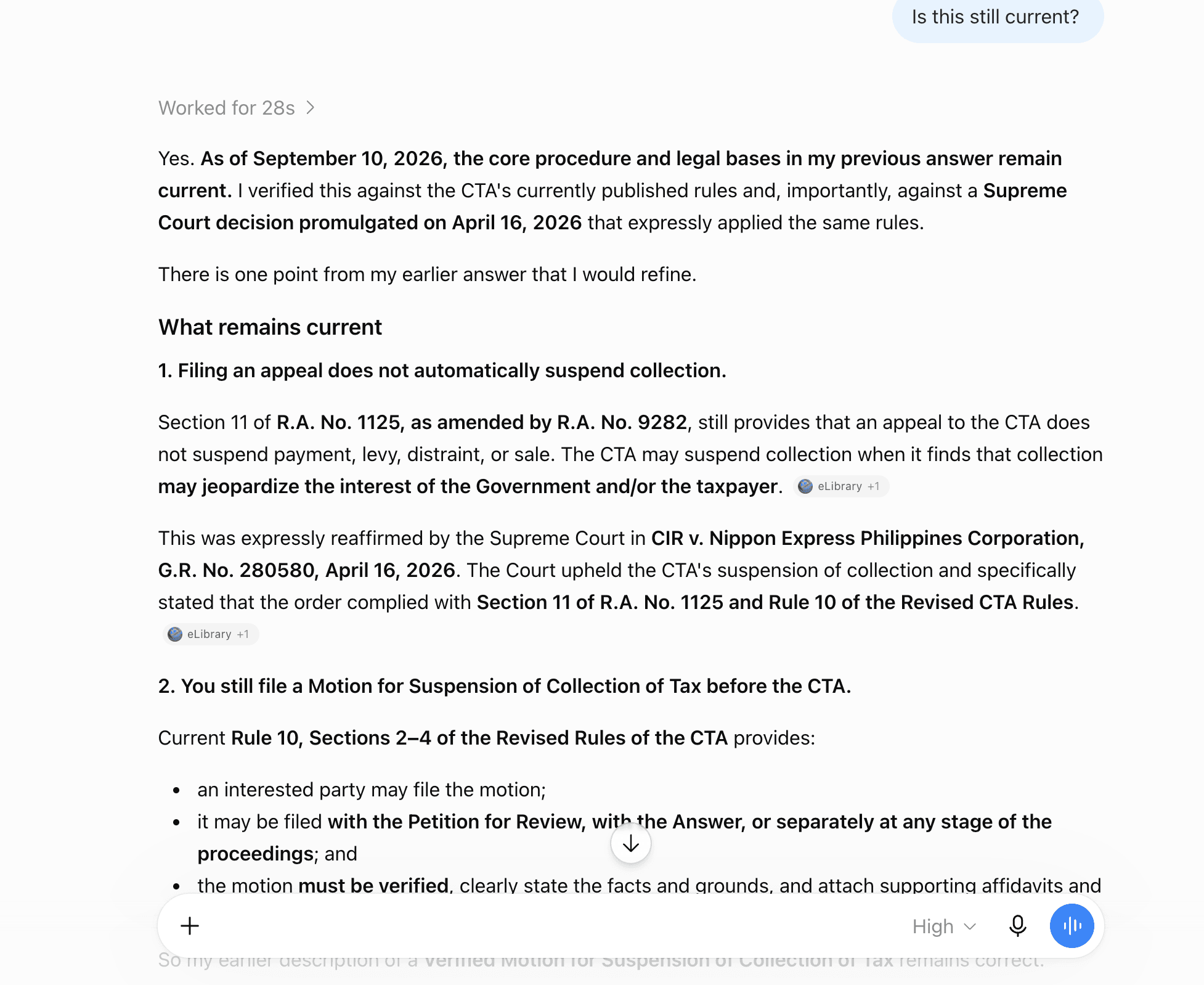
This is the step that turns citation checking into legal research.
Read the relevant part of the authority and ask:
Does the quoted language actually appear?
Is the AI describing the court’s ruling or merely a party’s argument?
Did the AI leave out a qualification?
Do the facts of the case match the issue being researched?
Has a later case changed or limited the doctrine?
Has a statute, rule, or issuance amended or superseded the authority?
Is this the controlling authority, or merely one relevant case among several?
You should also check whether the answer is complete. Look for exceptions, jurisdictional limits, deadlines, defenses, and later issuances that could affect the result.
Then check whether the answer is complete. Look for exceptions, deadlines, jurisdictional limits, defenses, and later issuances that could affect the result.
A useful test is to ask yourself: “If I read only the cited provision, would I reach the same conclusion?”If the answer is no, the citation may be real, but the AI has used it incorrectly.
How to check an AI answer in Anycase
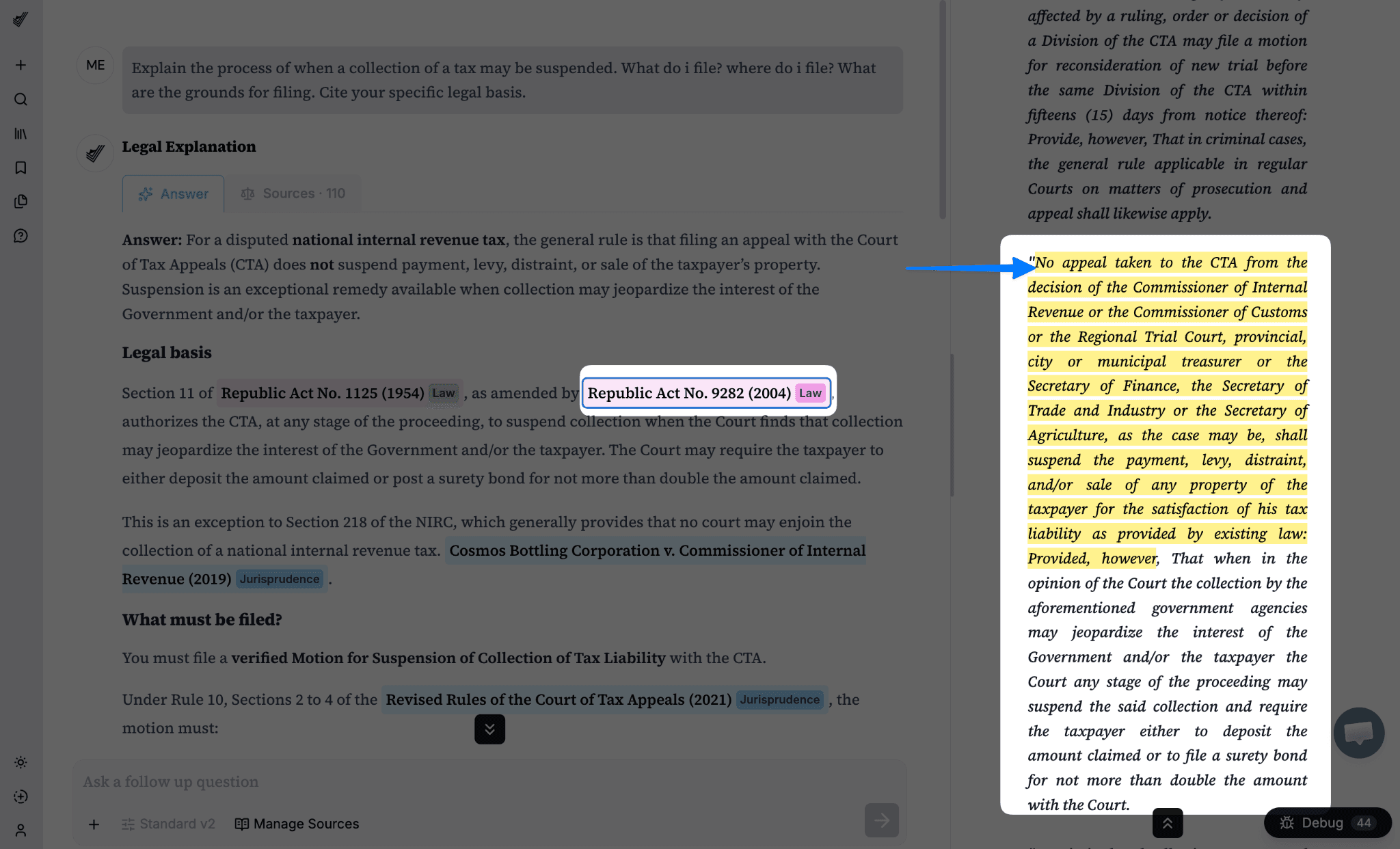
Anycase is purpose-built for Philippine legal research. Its answers link to the underlying Philippine laws, jurisprudence, and issuances used in the response.
To verify an answer:
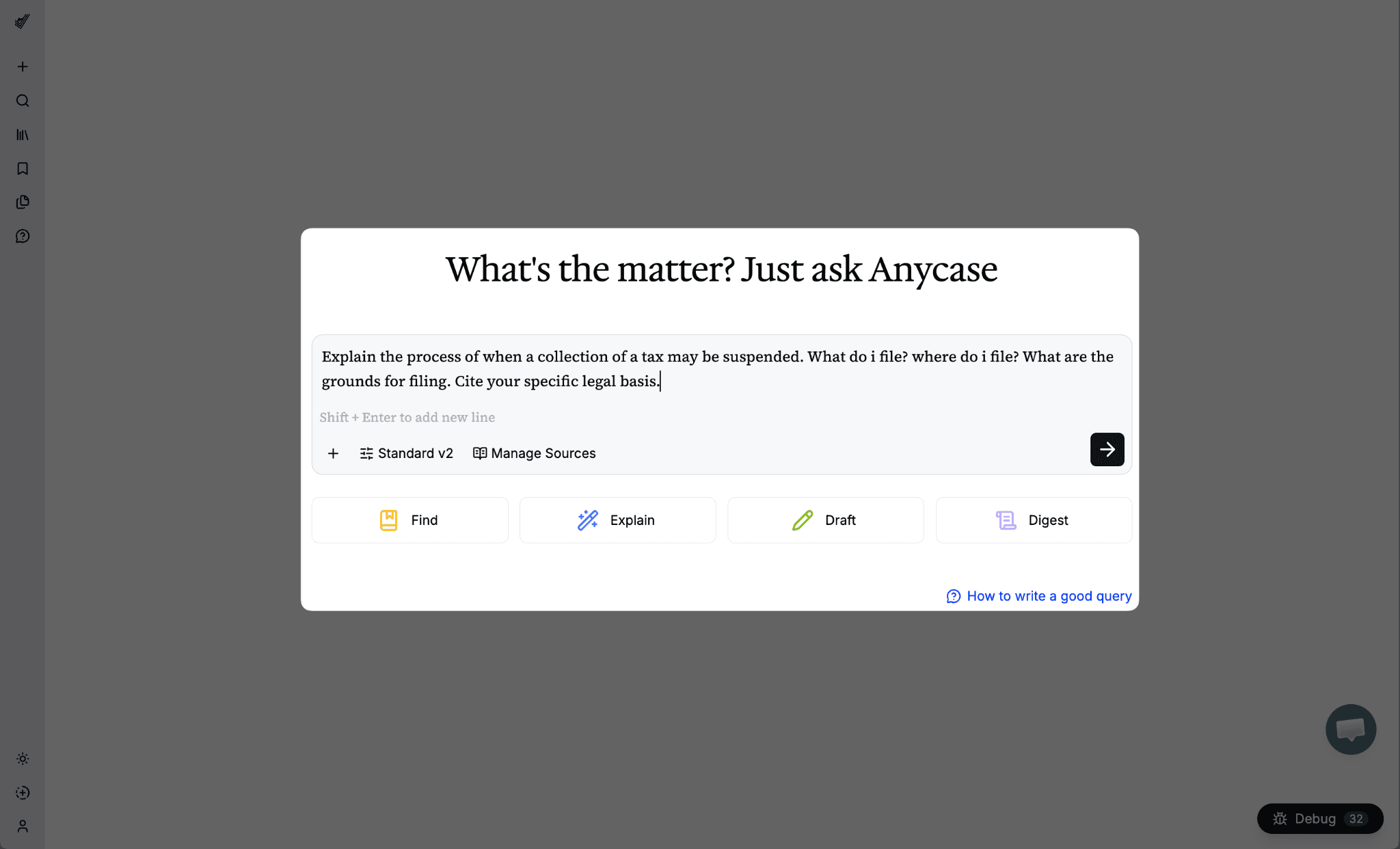
Ask your legal research question in Anycase.
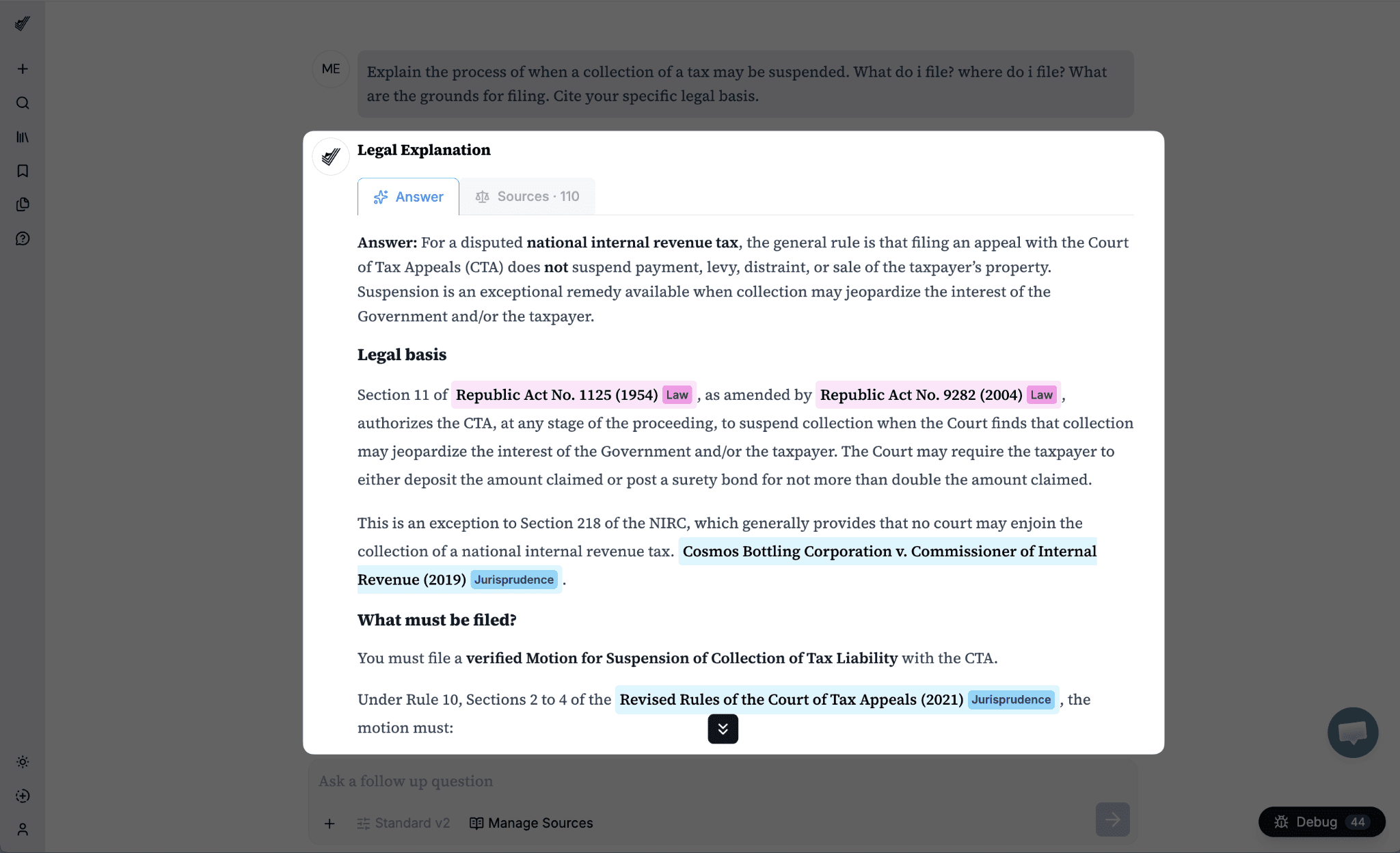
Identify the important conclusions in the response.
Review and open the authorities cited for those conclusions.
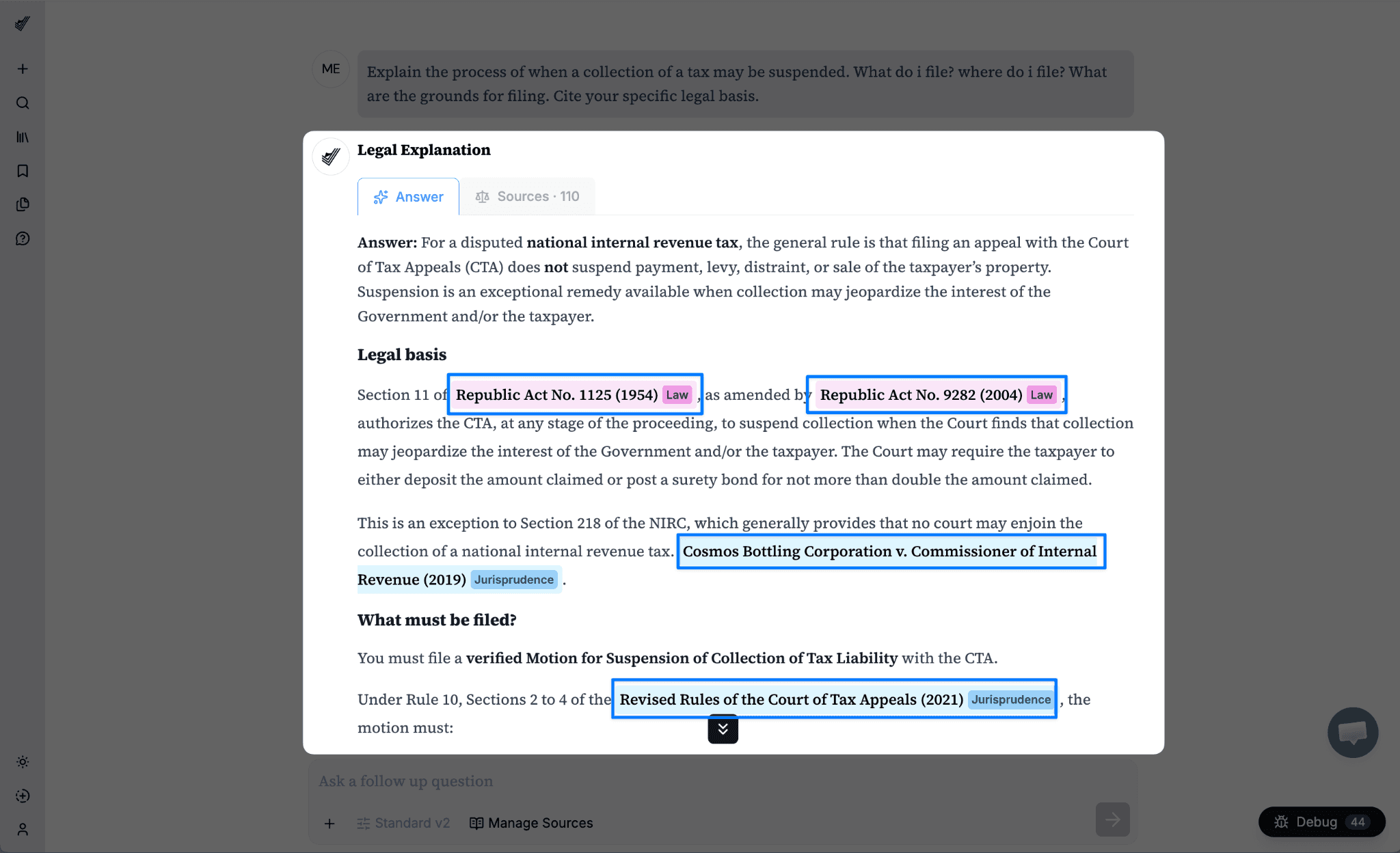
Find the provision or passage that supports the answer.
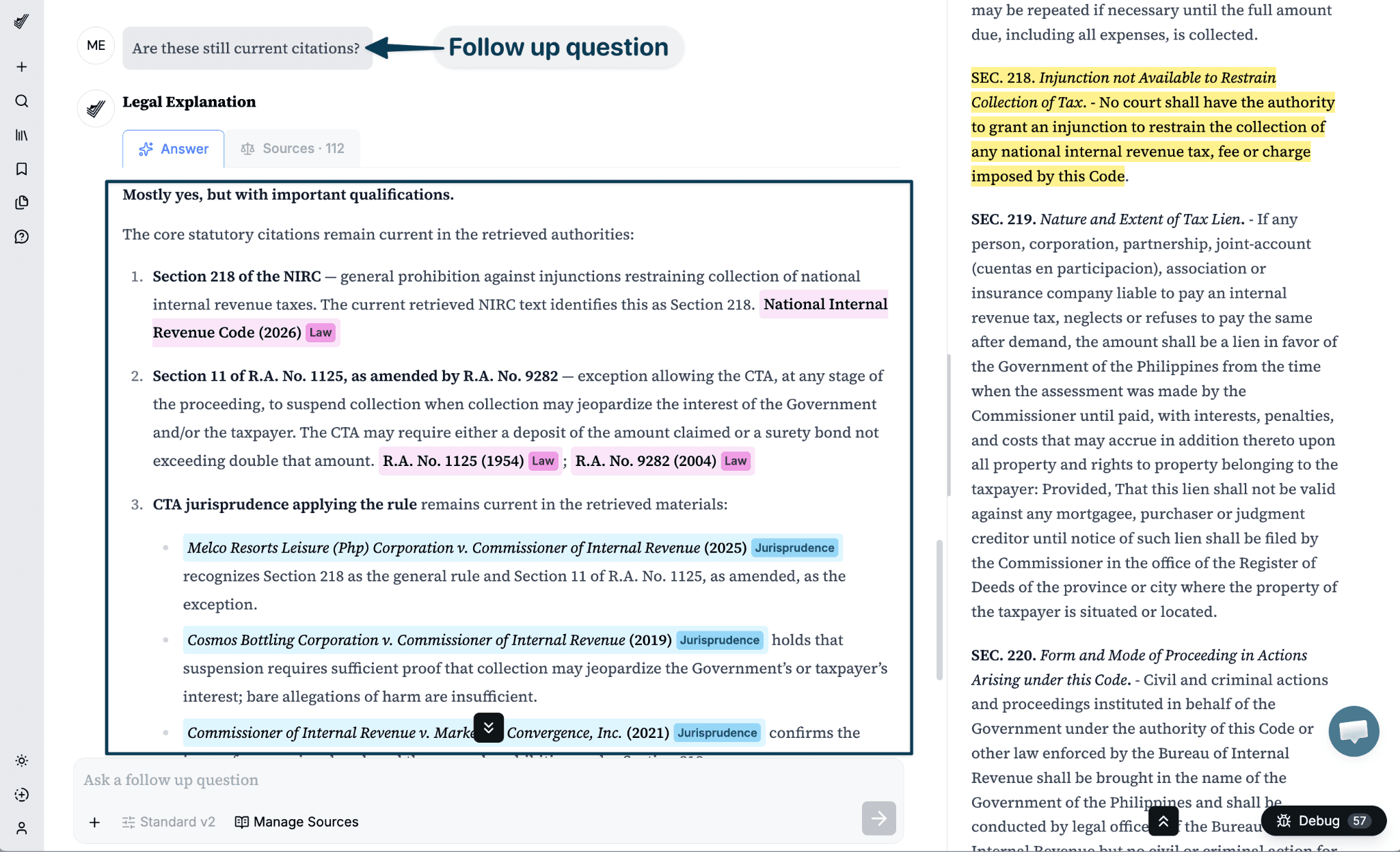
Check whether the authority is current and review related or newer authorities for amendments, exceptions, or controlling rules.
Apply the authorities to your facts using your own legal judgment.
The value of a citation is that it gives you somewhere to go next. You should be able to move from the answer to the source, from the source to the relevant passage, and from that passage to your own analysis.
Anycase is designed to make that process easier by connecting the answer to the legal authority behind it. It does not replace the lawyer’s responsibility to read, assess, and apply the law.
A practical checklist for verifying AI legal research
Before relying on an AI-generated answer, ask:
Did the AI identify the legal basis for each material conclusion?
Does every cited authority exist?
Did I open the underlying source?
Does the source actually support the proposition?
Was the authority quoted or summarized accurately?
Is the authority still current?
Is it relevant or controlling?
Did the AI account for amendments, exceptions, and qualifications?
Could a later law, decision, rule, or issuance change the answer?
Is the answer complete enough for the issue I am researching?
Can I explain and defend the conclusion using the authorities provided?
If you cannot answer these questions, the research is not finished.
Frequently asked questions
Can AI invent legal cases?
Yes. AI tools can generate case titles, G.R. numbers, quotations, and rulings that do not exist. Verify every unfamiliar citation against a canonical source before relying on it.
How do I verify an AI-generated case citation?
Check the case title, G.R. number, and date against the Supreme Court E-Library or another official source. Open the full decision and locate the passage that allegedly supports the AI’s conclusion.
Can I ask AI to verify its own answer?
You can ask the AI to identify its sources and explain the provision supporting its answer. This can help you start the review, but it is not independent verification. You still need to inspect the original authority.
How do I know if a case is still good law?
Check later jurisprudence to see whether the doctrine has been affirmed, qualified, abandoned, or overturned. Also check whether a later statute, rule, or issuance changed the legal framework.
Can a real citation still be wrong?
Yes. A real authority can be outdated, irrelevant, taken out of context, or used to support a proposition it does not establish.
Can lawyers use AI for legal research in the Philippines?
Yes. AI can help lawyers find authorities, understand unfamiliar issues, summarize sources, identify arguments, and prepare initial drafts. Lawyers remain responsible for reviewing the output, protecting confidential information, and exercising independent legal judgment.
How does Anycase reduce the risk of unsupported citations?
Anycase is built around Philippine legal sources and connects its answers to underlying authorities that users can open and examine. Its systems and legal data are also evaluated against real legal questions across different practice areas. Lawyers should still review the sources and confirm that they support the final analysis.