
Legal research, grounded in verified Philippine legal authorities.
Find
jurisprudence
, compare
doctrines
and
,
resolve
procedural questions
— Verify citations
and read full-text documents inside Anycase.
— Verify
resolve
procedural questions
citations and read full-text documents
inside Anycase.

Legal research, grounded in verified Philippine legal authorities.
Find
jurisprudence
, compare
doctrines
and
,
resolve
procedural questions
— Verify citations
and read full-text documents inside Anycase.
— Verify
resolve
procedural questions
citations and read full-text documents
inside Anycase.
Legal research, grounded in verified Philippine legal authorities.
Find
jurisprudence
, compare
doctrines
and
,
resolve
procedural questions
— Verify citations
and read full-text documents inside Anycase.
— Verify
resolve
procedural questions
citations and read full-text documents
inside Anycase.
















Trusted by leading legal institutions, and over 5,000+ legal professionals and law students
SEE THE ANYCASE DIFFERENCE
Anycase far outperforms any general purpose
model when it comes to Philippine law
Litigation
Labor
Tax
Family
Can evidence obtained through a warrantless search of a vehicle, based solely on an officer’s suspicion of narcotics, be admissible under constitutional protections against unreasonable searches and seizures?”
A warrantless vehicle search based only on suspicion is unconstitutional; the resulting evidence is inadmissible for any purpose.
Explanation (what courts require)
The constitutional default
Because the Constitution requires a judicial warrant based on probable cause, therefore a warrantless vehicle search is presumed unreasonable, and its fruits are inadmissible unless the State proves a recognized exception.
—
Case illustrations (why “suspicion” is not enough)
In warrantless search incident to arrest cases, the Court stresses that the arrest must be lawful and based on the officer’s personal knowledge of an overt act, not merely suspicion; otherwise, both arrest and search are unlawful and the evidence is excluded. —
;
In moving vehicle cases, the Court has ruled that an unverified/anonymous tip or solitary information does not generate probable cause for an intrusive search; probable cause must arise from a confluence of suspicious circumstances personally observed. —
;
Because warrantless searches are unconstitutional unless they fall within a recognized exception, and because evidence obtained from unconstitutional searches is inadmissible for any purpose, therefore a vehicle search based solely on suspicion of narcotics (without probable cause or a valid exception) yields inadmissible evidence. — ;
1987 Constitution, Art. III, Sec. 2–3(2) (1987)
Law
1987 Constitution, Art. III, Sec. 2–3(2) (1987)
Law
People v. Mulingbayan (2022)
People v. Jumarang (2022)
Jurisprudence
v. Yanson (2019)
Jurisprudence
People v. Guerrero (2020)
Jurisprudence
People of the Philippines
Jurisprudence
People v. Mulingbayan (2022)
Jurisprudence
GPT
Can evidence obtained through a warrantless search of a vehicle, based solely on an officer’s suspicion of narcotics, be admissible under constitutional protections against unreasonable searches and seizures?”
Yes. Evidence from a warrantless vehicle search may be admissible if the search falls within a recognized exception to the constitutional ban on unreasonable searches and seizures. A police officer’s mere suspicion is not enough; admissibility depends on whether the officer had probable cause or whether another vehicle‑search doctrine applies.
The key limitations and exceptions are these:
Automobile exception. If officers have probable cause to believe the vehicle contains contraband, they may search it without a warrant. Probable cause requires specific, articulable facts—not just a hunch—that narcotics are present. This aligns with general rules that only relevant and lawfully obtained evidence is admissible and that courts may exclude evidence obtained in violation of constitutional protections, consistent with general evidentiary principles reflected in rules on relevance and exclusion of unlawfully obtained or prejudicial evidence tdrlawfirm.com.
Search incident to lawful arrest. Officers may search areas of the vehicle within the arrestee’s reach if the arrest itself is valid. This still requires a lawful basis for the arrest, and evidence may be excluded if obtained after unlawful interference with a defendant’s right to present or challenge evidence, a concern reflected in discussions on witness rights and testimonial safeguards osad.illinois.gov.
Plain‑view doctrine. If contraband is immediately visible from a lawful vantage point, it may be seized and admitted. The officer must be lawfully present and the incriminating nature must be obvious.
Consent. Evidence is admissible if the vehicle owner or driver voluntarily consents to the search. Consent must be freely given and not coerced.
Stop‑and‑frisk / protective sweep of the vehicle. Officers may conduct a limited search for weapons if they have reasonable suspicion that the driver is armed and dangerous, but this does not authorize a narcotics search unless separate probable cause arises.
SEE THE ANYCASE DIFFERENCE
Anycase far outperforms any general purpose model when it comes to Philippine law
Litigation
Labor
Tax
Family
Can evidence obtained through a warrantless search of a vehicle, based solely on an officer’s suspicion of narcotics, be admissible under constitutional protections against unreasonable searches and seizures?”
A warrantless vehicle search based only on suspicion is unconstitutional; the resulting evidence is inadmissible for any purpose.
Explanation (what courts require)
The constitutional default
Because the Constitution requires a judicial warrant based on probable cause, therefore a warrantless vehicle search is presumed unreasonable, and its fruits are inadmissible unless the State proves a recognized exception.
—
Case illustrations (why “suspicion” is not enough)
In warrantless search incident to arrest cases, the Court stresses that the arrest must be lawful and based on the officer’s personal knowledge of an overt act, not merely suspicion; otherwise, both arrest and search are unlawful and the evidence is excluded. — ;
In moving vehicle cases, the Court has ruled that an unverified/anonymous tip or solitary information does not generate probable cause for an intrusive search; probable cause must arise from a confluence of suspicious circumstances personally observed. —
;
Because warrantless searches are unconstitutional unless they fall within a recognized exception, and because evidence obtained from unconstitutional searches is inadmissible for any purpose, therefore a vehicle search based solely on suspicion of narcotics (without probable cause or a valid exception) yields inadmissible evidence. —
;
1987 Constitution, Art. III, Sec. 2–3(2) (1987)
Law
1987 Constitution, Art. III, Sec. 2–3(2) (1987)
Law
People v. Mulingbayan (2022)
Jurisprudence
People v. Jumarang (2022)
Jurisprudence
People v. Guerrero (2020)
Jurisprudence
People of the Philippines v. Yanson (2019)
Jurisprudence
Jurisprudence
People v. Mulingbayan (2022)
GPT
Can evidence obtained through a warrantless search of a vehicle, based solely on an officer’s suspicion of narcotics, be admissible under constitutional protections against unreasonable searches and seizures?”
Yes. Evidence from a warrantless vehicle search may be admissible if the search falls within a recognized exception to the constitutional ban on unreasonable searches and seizures. A police officer’s mere suspicion is not enough; admissibility depends on whether the officer had probable cause or whether another vehicle‑search doctrine applies.
The key limitations and exceptions are these:
Automobile exception. If officers have probable cause to believe the vehicle contains contraband, they may search it without a warrant. Probable cause requires specific, articulable facts—not just a hunch—that narcotics are present. This aligns with general rules that only relevant and lawfully obtained evidence is admissible and that courts may exclude evidence obtained in violation of constitutional protections, consistent with general evidentiary principles reflected in rules on relevance and exclusion of unlawfully obtained or prejudicial evidence tdrlawfirm.com.
Search incident to lawful arrest. Officers may search areas of the vehicle within the arrestee’s reach if the arrest itself is valid. This still requires a lawful basis for the arrest, and evidence may be excluded if obtained after unlawful interference with a defendant’s right to present or challenge evidence, a concern reflected in discussions on witness rights and testimonial safeguards osad.illinois.gov.
Plain‑view doctrine. If contraband is immediately visible from a lawful vantage point, it may be seized and admitted. The officer must be lawfully present and the incriminating nature must be obvious.
Consent. Evidence is admissible if the vehicle owner or driver voluntarily consents to the search. Consent must be freely given and not coerced.
Stop‑and‑frisk / protective sweep of the vehicle. Officers may conduct a limited search for weapons if they have reasonable suspicion that the driver is armed and dangerous, but this does not authorize a narcotics search unless separate probable cause arises.
SEE THE ANYCASE DIFFERENCE
Anycase far outperforms any general purpose model when it comes to Philippine law
Litigation
Labor
Tax
Family
Can evidence obtained through a warrantless search of a vehicle, based solely on an officer’s suspicion of narcotics, be admissible under constitutional protections against unreasonable searches and seizures?”
A warrantless vehicle search based only on suspicion is unconstitutional; the resulting evidence is inadmissible for any purpose.
Explanation (what courts require)
The constitutional default
Because the Constitution requires a judicial warrant based on probable cause, therefore a warrantless vehicle search is presumed unreasonable, and its fruits are inadmissible unless the State proves a recognized exception.
—
Case illustrations (why “suspicion” is not enough)
In warrantless search incident to arrest cases, the Court stresses that the arrest must be lawful and based on the officer’s personal knowledge of an overt act, not merely suspicion; otherwise, both arrest and search are unlawful and the evidence is excluded. —
;
In moving vehicle cases, the Court has ruled that an unverified/anonymous tip or solitary information does not generate probable cause for an intrusive search; probable cause must arise from a confluence of suspicious circumstances personally observed. —
;
Because warrantless searches are unconstitutional unless they fall within a recognized exception, and because evidence obtained from unconstitutional searches is inadmissible for any purpose, therefore a vehicle search based solely on suspicion of narcotics (without probable cause or a valid exception) yields inadmissible evidence. — ;
1987 Constitution, Art. III, Sec. 2–3(2) (1987)
Law
1987 Constitution, Art. III, Sec. 2–3(2) (1987)
Law
People v. Mulingbayan (2022)
People v. Jumarang (2022)
Jurisprudence
v. Yanson (2019)
Jurisprudence
People v. Guerrero (2020)
Jurisprudence
People of the Philippines
Jurisprudence
People v. Mulingbayan (2022)
Jurisprudence
GPT
Can evidence obtained through a warrantless search of a vehicle, based solely on an officer’s suspicion of narcotics, be admissible under constitutional protections against unreasonable searches and seizures?”
Yes. Evidence from a warrantless vehicle search may be admissible if the search falls within a recognized exception to the constitutional ban on unreasonable searches and seizures. A police officer’s mere suspicion is not enough; admissibility depends on whether the officer had probable cause or whether another vehicle‑search doctrine applies.
The key limitations and exceptions are these:
Automobile exception. If officers have probable cause to believe the vehicle contains contraband, they may search it without a warrant. Probable cause requires specific, articulable facts—not just a hunch—that narcotics are present. This aligns with general rules that only relevant and lawfully obtained evidence is admissible and that courts may exclude evidence obtained in violation of constitutional protections, consistent with general evidentiary principles reflected in rules on relevance and exclusion of unlawfully obtained or prejudicial evidence tdrlawfirm.com.
Search incident to lawful arrest. Officers may search areas of the vehicle within the arrestee’s reach if the arrest itself is valid. This still requires a lawful basis for the arrest, and evidence may be excluded if obtained after unlawful interference with a defendant’s right to present or challenge evidence, a concern reflected in discussions on witness rights and testimonial safeguards osad.illinois.gov.
Plain‑view doctrine. If contraband is immediately visible from a lawful vantage point, it may be seized and admitted. The officer must be lawfully present and the incriminating nature must be obvious.
Consent. Evidence is admissible if the vehicle owner or driver voluntarily consents to the search. Consent must be freely given and not coerced.
Stop‑and‑frisk / protective sweep of the vehicle. Officers may conduct a limited search for weapons if they have reasonable suspicion that the driver is armed and dangerous, but this does not authorize a narcotics search unless separate probable cause arises.
Using Anycase for Legal Research

Search
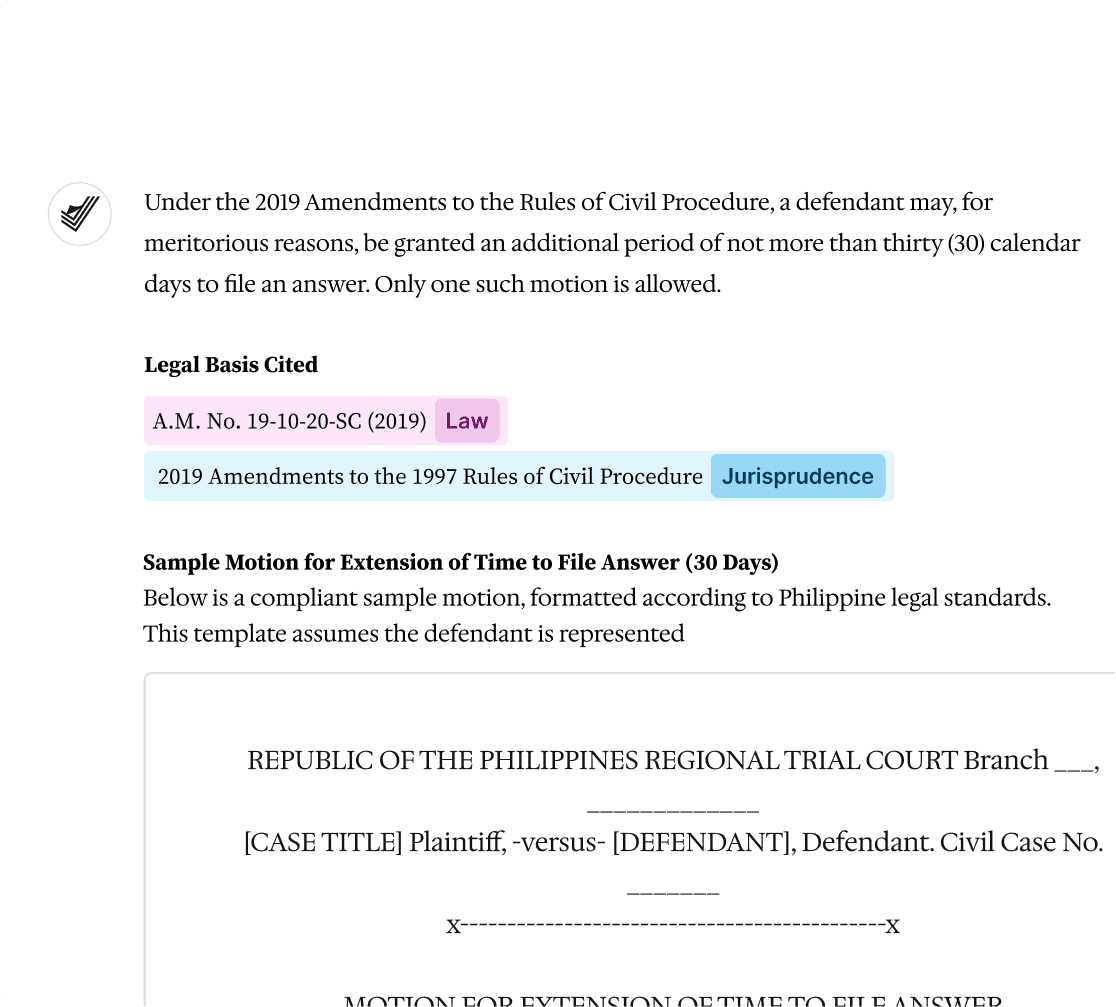
Verify
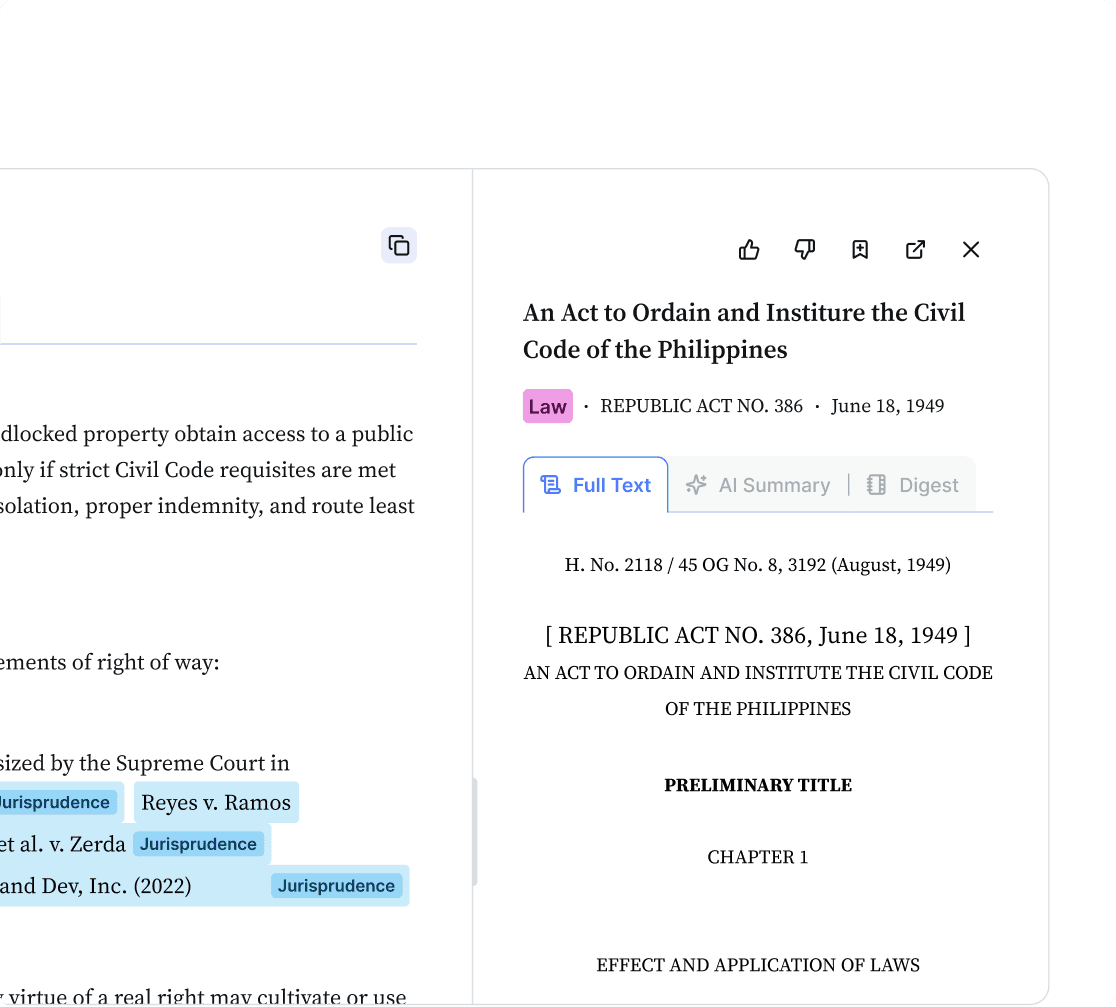
Browse
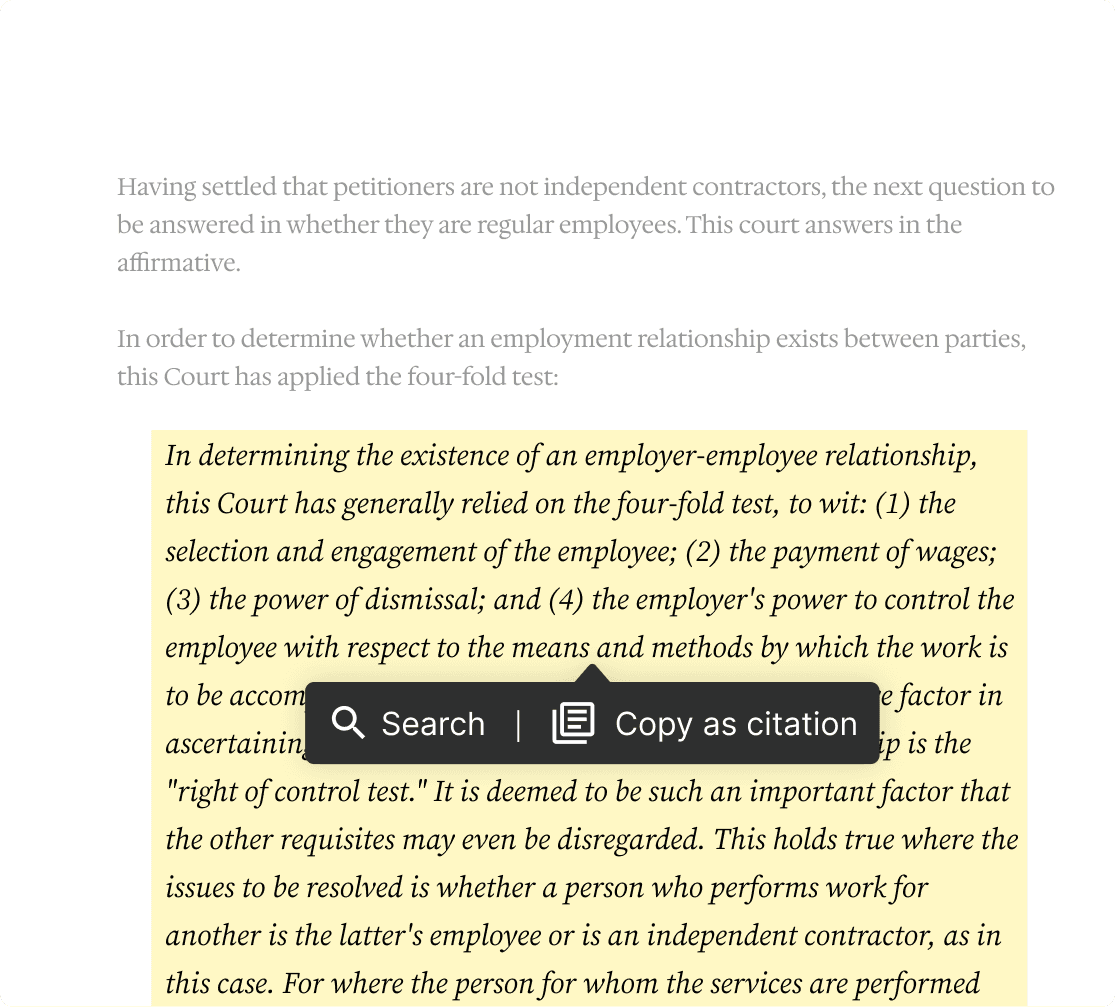
Cite
Using Anycase for Legal Research
Search
Verify
Browse
Cite
Using Anycase for Legal Research
Search
Verify
Browse
Cite
Anycase.ai is where canonical legal sources meet bar-tested legal AI
Anycase.ai is where canonical legal sources meet bar-tested legal AI
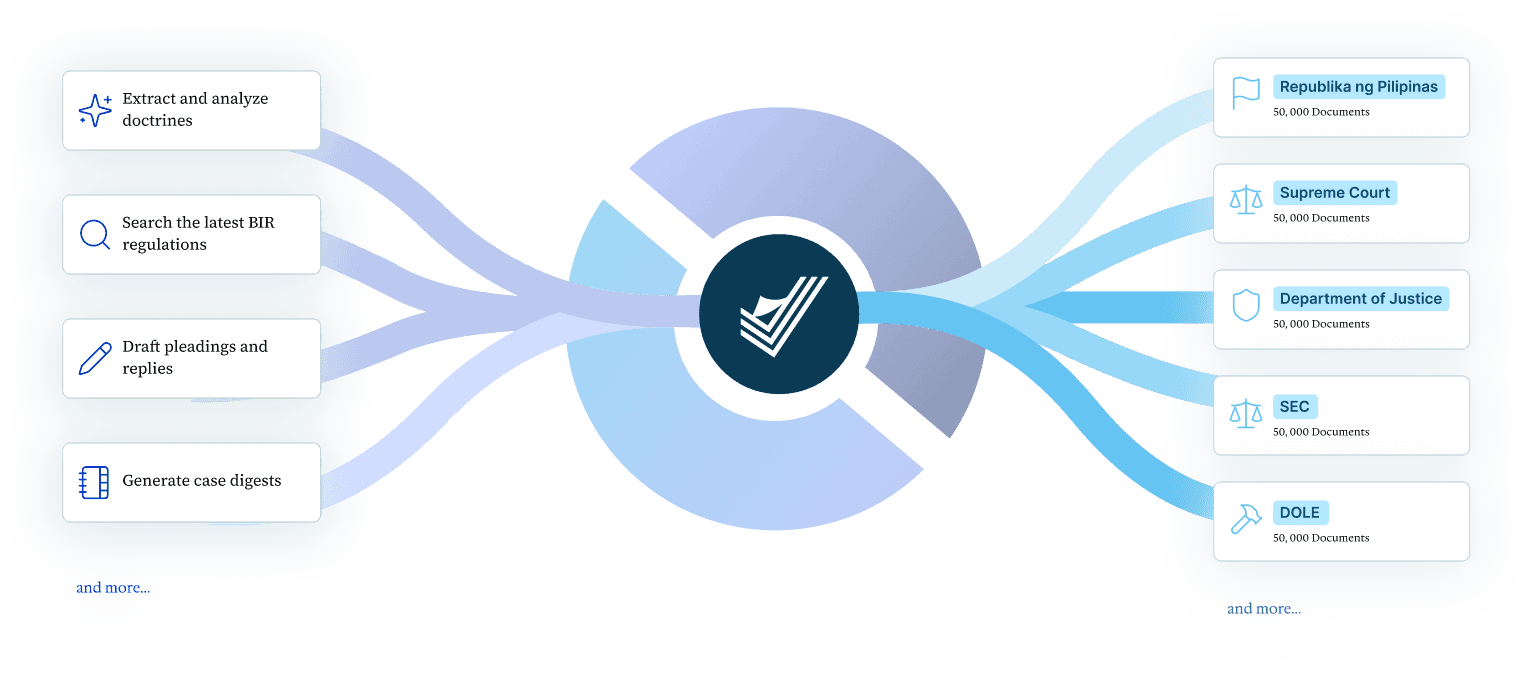
FEATURES AND CAPABILITIES
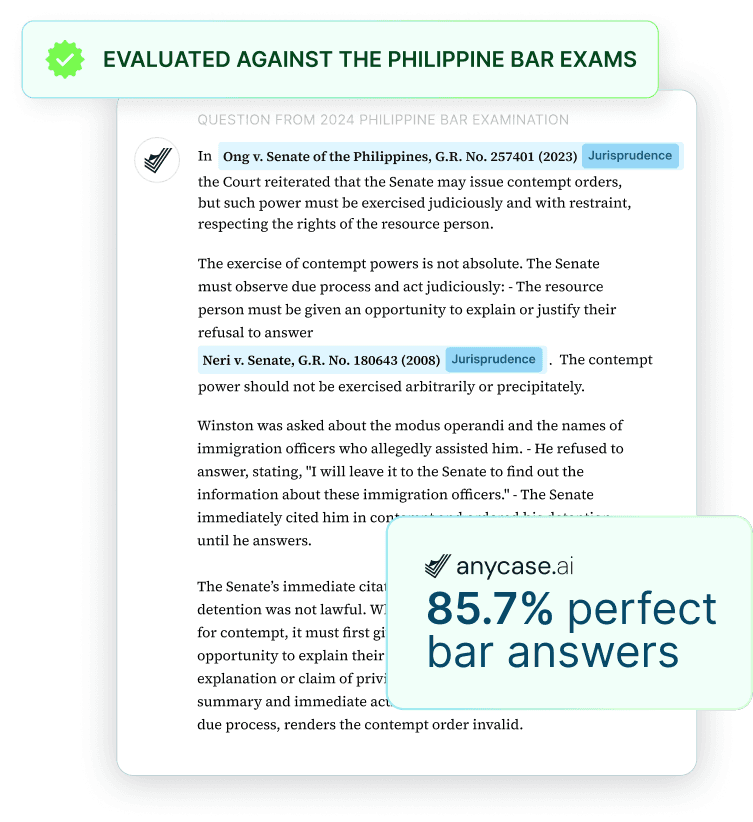
LEGAL AI
Efficient legal research, without sacrificing accuracy
Retrieves controlling jurisprudence, statutes, and issuances for your question
Organizes legal analysis into clear, scannable headers
Every answer is backed by citations you can open, read, and cite
Smart Legal AI ->
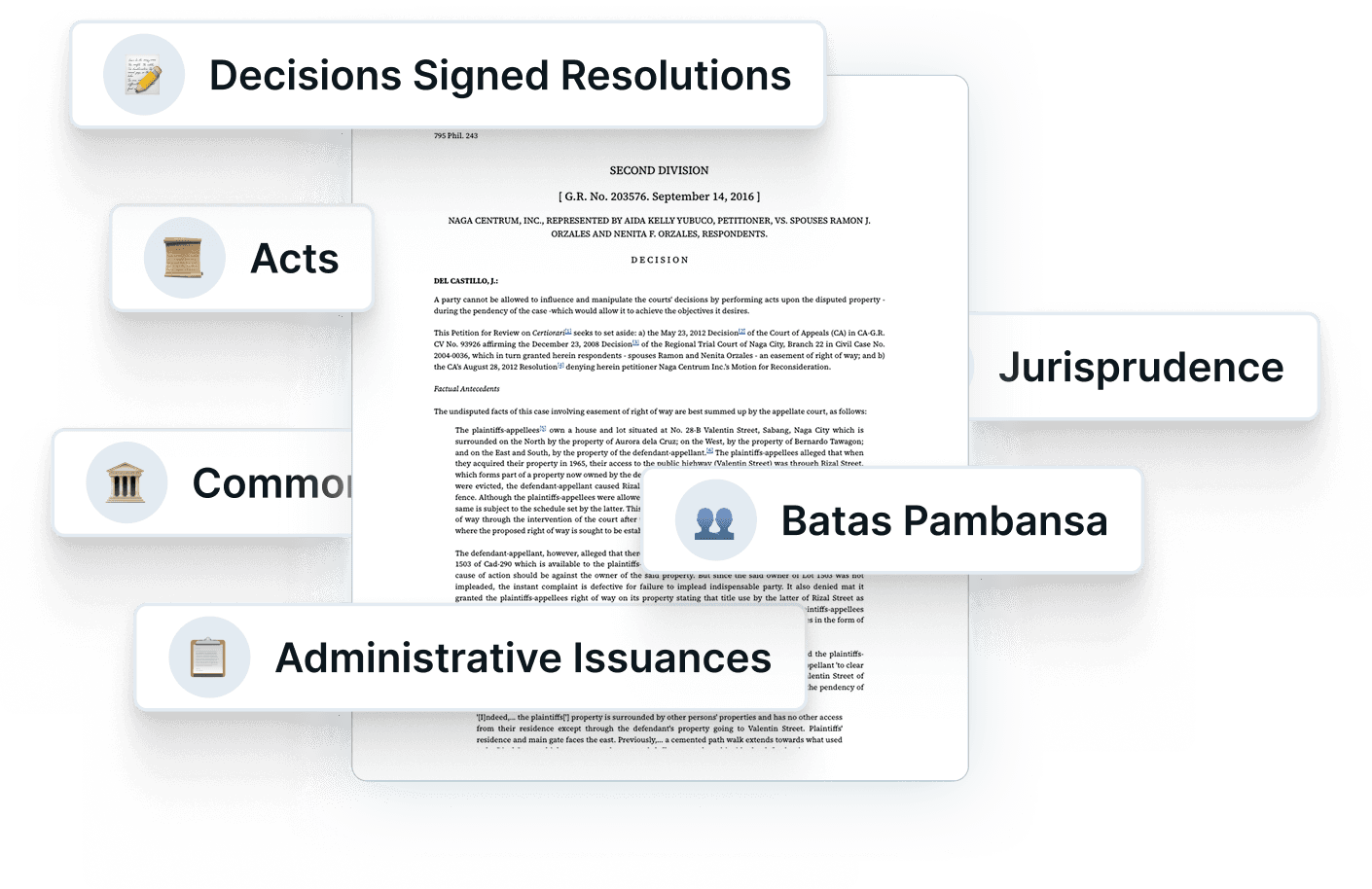
LEGAL DATABASE
Centralized Philippine legal library, updated daily
Supreme Court jurisprudence and Philippine statutes
Administrative issuances from major government agencies
Synced with official government sources, updated daily
View all Data Sources ->
Sign in to explore these features, and more
Sign in to explore these features, and more
Sign in to explore these features, and more

Upload up to 5 images
Upload up to 5 images
Upload up to 5 images

Download PDFs and browse full-text documents
Download PDFs and browse full-text documents
Download PDFs and browse full-text documents

Install for mobile, tablet, or desktop access
Install for mobile, tablet, or desktop access
Install for mobile, tablet, or desktop access

Get AI summaries and case digests
Get AI summaries and case digests
Get AI summaries and case digests
Trusted by legal teams,
built for various practice areas
Trusted by legal teams,
built for various practice areas
Trusted by legal teams,
built for various practice areas
💼
💼
Labor
Labor
👨🏻⚖️
👨🏻⚖️
Litigation
Litigation
💰
💰
Tax
Tax
🏛️
🏛️
Criminal
Criminal
⚖️
⚖️
and more
Designed for firms and law schools
Designed for firms and law schools

Law Schools
Law Schools

Mid-size to larger legal organizations
Mid-size to larger legal organizations

Solo practitioners and small law firms
Solo practitioners and small law firms
Level 21, 8 Rockwell, Hidalgo Dr., Rockwell Center, Makati City, Metro Manila, Philippines

Level 21, 8 Rockwell, Hidalgo Dr., Rockwell Center, Makati City, Metro Manila, Philippines
Level 21, 8 Rockwell, Hidalgo Dr., Rockwell Center, Makati City, Metro Manila, Philippines
Level 21, 8 Rockwell, Hidalgo Dr., Rockwell Center, Makati City, Metro Manila, Philippines